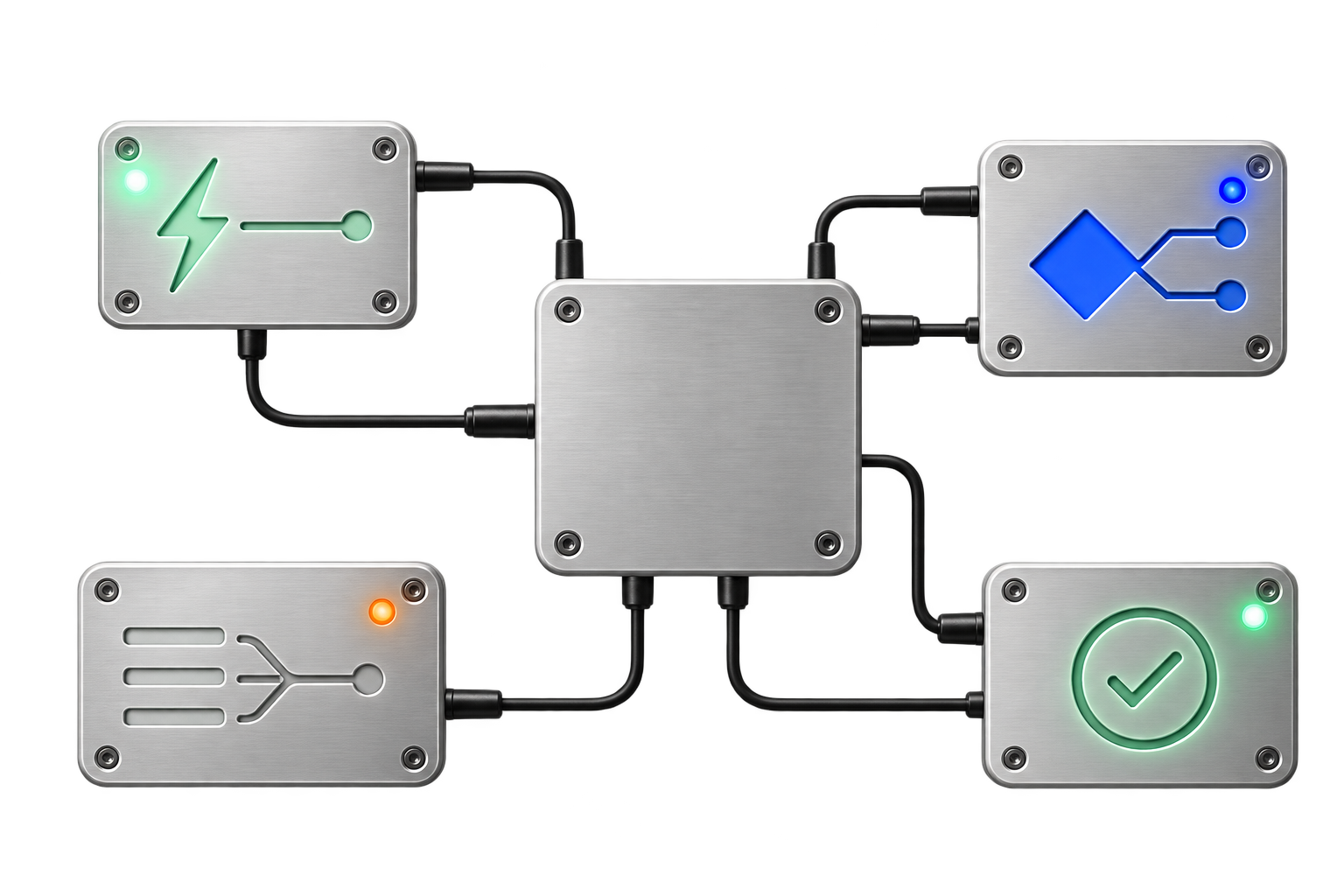
Shorter handling time
Tasks move between stages without manual hand-offs.
We map work, connect systems and implement flows that handle rules, queues, exceptions and human oversight.
The greatest losses occur between systems: re-entering data, manual checks, waiting for decisions and correcting errors. We design the process end to end.
A process audit identifies repetitive steps as well as data sources, decisions, delays and common exceptions. Together we select the starting point and define measures such as handling time, manual operations, error rate or cost per case. Tools and workflow architecture are chosen only after the expected operational outcome is clear.
The delivered workflow has explicit states, validation, queues, retries and defined approval points. Teams can see what completed, what is waiting and why a task needs attention. Monitoring and event history make the process maintainable, while modular architecture allows further stages to be automated without rebuilding the entire solution.
Tasks move between stages without manual hand-offs.
Validation and consistent rules reduce corrections and duplicates.
Process status, history and failures are available in one place.
The best starting points are frequent, data-driven processes with a repeatable outcome.
Usually not. It connects them and organises the flow of information.
We design retry policies, error queues, alerts and clear points for human decisions.
In the first conversation we will define the objective, data, constraints and best starting point.
Book a call